OAKLAND INDUSTRIAL MARKET NEWS NOW
- Market Report
OAKLAND INDUSTRIAL MARKET NEWS NOW
- Market Report
Description
INDUSTRIAL PROPERTY SHOWCASE
| OAKLAND’S SEAPORT LOGISTICS COMPLEX |
Oakland – The Port of Oakland
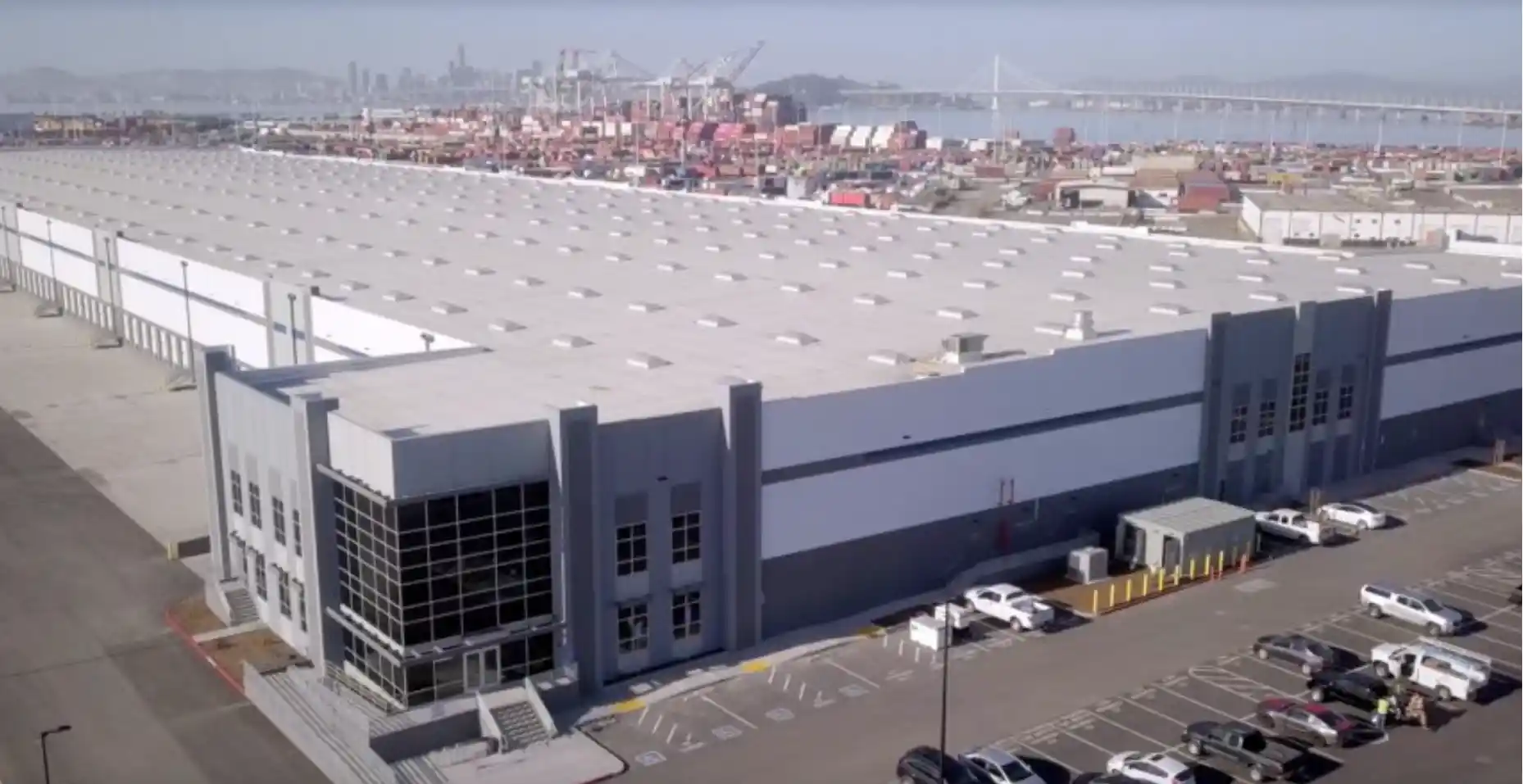
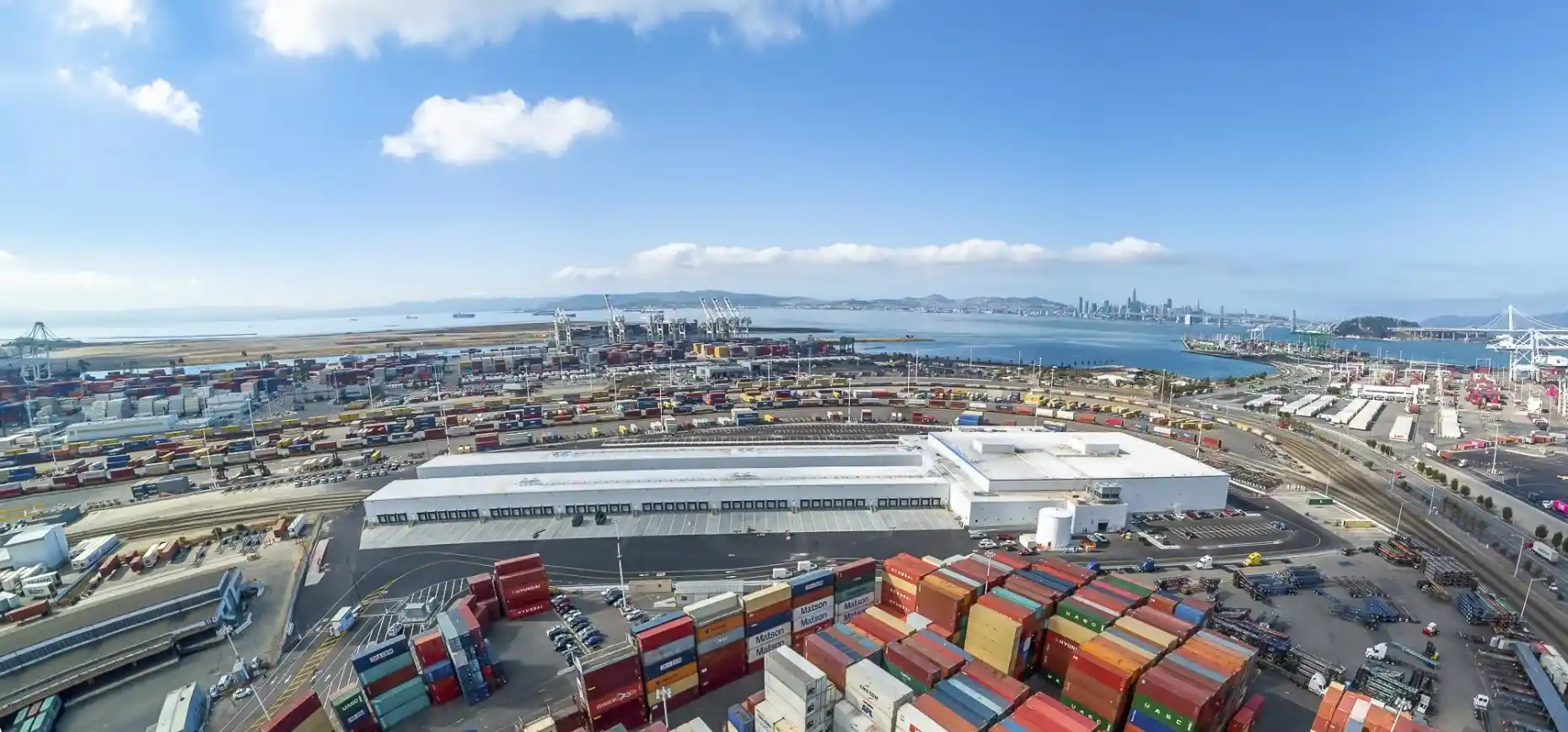
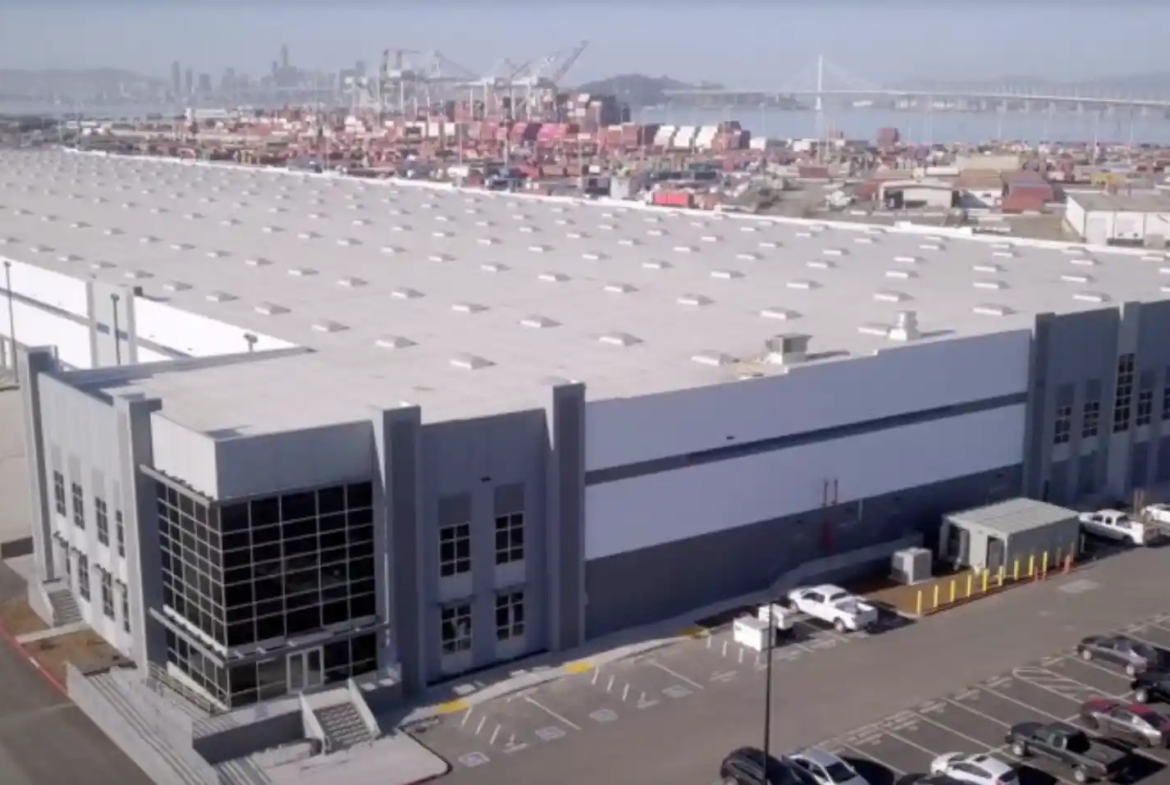
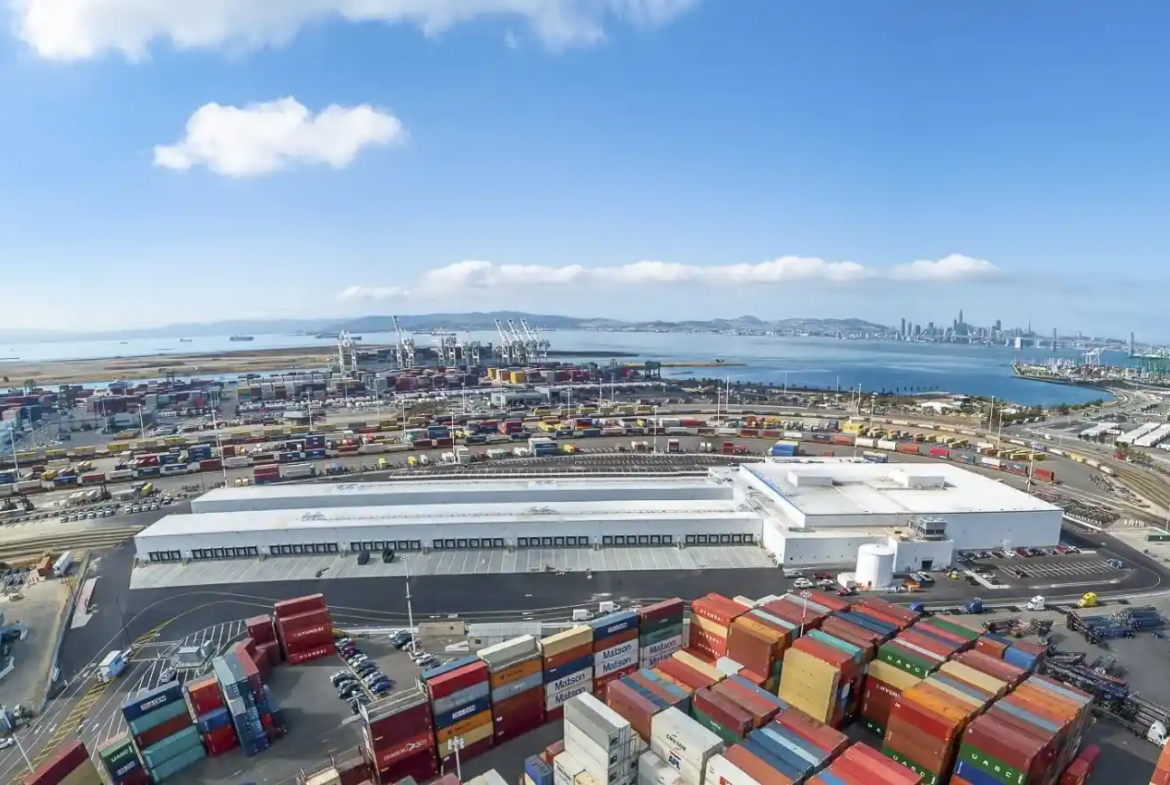
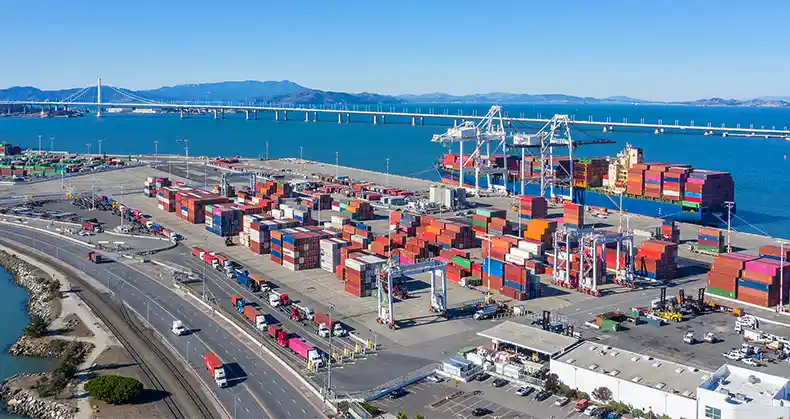
Centrepoint has leased its newly built warehouse at the Port of Oakland’s Seaport Logistics Complex to PCC Logistics.
Construction of the 460,000 square-foot facility was finished last year. PCC Logistics signed the lease in January. “This effectively marks the launch of the Port’s Seaport Logistics Complex, a long-awaited re-use of land that was once occupied by the US Army,” said Port of Oakland Executive Director Danny Wan.
“The warehouse construction supported local jobs and now with a tenant moving in, that means more jobs being generated here in Oakland.” The news also marks the completion of phase one of the redevelopment of the former Oakland Army Base.
According to the port, the 27-acre location is an exceptional site for shippers as it provides access to its marine terminals, rail facilities, and highways. Bryan Brandes, Port of Oakland Maritime Director, added: “The new warehouse operation, being so close to marine and rail terminals, will be efficient for moving cargo through Oakland.
“This is a vision the Port has had for more than a decade and now it’s coming to fruition at just the right time.” The new facility will help ease the flow of goods at Oakland’s seaport after a huge surge in import cargo over the last few years.
Oakland’s import business continues to grow, increasing 6.3 per cent year-on-year. However, exports declined 10.3 per cent over the same period.
In other recent news, the Port of Oakland has said it is time to invest in a renewed, smart, and zero-emissions port.
Sea-Logix, LLC: Offers port and intermodal drayage, cross-docking, and transload services in its Northern California location. It is part of The Pasha Group.
Seaport Logistics Complex: A project at the Port of Oakland that is expanding the port’s capabilities. It was developed on 20 acres of land from a former Army Terminal and features a new rail yard for multimodal transport.
Prologis Oakland Global Logistics Center: An industrial property near the Port of Oakland with tenants and infrastructure related to global logistics.
Details on Sea-Logix
- Services: Provides transportation between the Port of Oakland and other locations in Northern California. Services include:
- Port and intermodal drayage
- Cross-docking and transloading
- LTL (less-than-truckload) consolidation services
- Equipment: Operates a fleet of company-owned tractors with green technology and GPS tracking.
- Background: Has a long history of serving the West Coast ports, having been part of SeaLand and Horizon Lines before becoming an independent company within The Pasha Group.
Details on the Seaport Logistics Complex
- Purpose: To attract more container cargo to the Port of Oakland and strengthen its infrastructure.
- Features: The complex was designed with multimodal capabilities to support the movement of cargo by ship, truck, and train.
- Zero-emissions goal: As part of broader initiatives, the Port of Oakland is working towards a zero-emissions seaport and is investing in technology such as mobile shore power, solar energy, and hydrogen fueling infrastructure.
Details on Prologis Oakland Global Logistics Center
- Function: Serves as a hub for real estate and supply chain logistics services, supporting the movement of goods in and out of the Port of Oakland.
The Port of Oakland is part of an economic ecosystem that supports 73,000 middle-wage jobs throughout Northern California. [1] These are jobs in industries like transportation, logistics, warehousing and wholesale trade. They are middle-class jobs: well-compensated, skilled-labor positions that don’t require an advanced degree — a type that is increasingly disappearing from the region.
Beyond the jobs that are a part of its core businesses, the Port is an anchor for the East Bay’s broader industrial ecosystem, which ranges from manufacturing businesses to wholesalers, storage and recycling companies to luxury importers, industrial artists and makers. The Port’s presence supports other industries, bringing in goods used by Bay Area companies and allowing these industries and others (such as Central Valley agriculture) to export their products to global markets. The existence of a working industrial Port plays an important role in conversations about inclusive economic opportunity in the Bay Area. But this engine of jobs faces some big challenges, ranging from significant debt pressure to rising competition from other ports in North America. Its long-term presence in the Bay Area is not assured.
For those concerned, as SPUR is, about the region’s overall economic competitiveness and the availability of middle-wage jobs, it is essential to understand the complicated infrastructure and policy agenda that the Port of Oakland has to navigate.
Defining the Port
At 5,000 acres of land and 10,000 acres of water, the Port of Oakland occupies 19 miles — almost the entire extent — of the Oakland waterfront, stretching from the Bay Bridge in the north to San Leandro in the south.
While many hear the word “port” and think of ships and the iconic cranes of the maritime port, the Port of Oakland in fact comprises three different lines of business: a 1,300 acre seaport, an international airport and a real-estate operation with nearly 840 acres of office, retail, hotels and parks. [2] Together the maritime, aviation and commercial real estate enterprises of the Port have an operating budget of $314 million annually. [3] The Port and its partners support nearly 29,000 direct jobs, more than half of them in Alameda County.
Since 1927 when it was formally incorporated, the Port of Oakland has existed nominally within, but functionally independent of, local government. The Oakland mayor nominates commissioners, and the Oakland City Council appoints them. Once appointed, the Oakland Board of Port Commissioners makes policy decisions on how to run the Port, and Port staff operates and manages the Port.
As an enterprise agency, the Port of Oakland has its own budget and is charged with generating the revenue to sustain its own operations. Though this belies a complex fiscal relationship between the Port and local governments. The Port doesn’t receive local tax dollars, but it does count on local, state and federal grants for major capital projects, a key fact for a capital-intensive industry. The Port contributes to local coffers in payments for the services it requires — police, fire, water, etc. — and the economic activity of the Port and its partners generates hundreds of millions in state and local taxes.
In practical terms, the Port of Oakland is a landlord port, maintaining, leasing and providing some facility services to tenant operators for a range of economic activities. Tenants of the Port include shipping lines and airlines, terminal operators, aircraft maintenance, logistics and exporting and importing businesses and other companies that do business on the Port’s land. This in contrast to ports that actually operate their own terminals and hire their own dockworkers. [The major ports of the south Atlantic region (in Georgia, the Carolinas and Virginia), all have an operating port model.]
As a landlord, the Port of Oakland competes with other ports for its business. For example, shipping companies can choose to go to Los Angeles or Long Beach, California, Seattle or Tacoma, Washington or Prince Rupert, in British Columbia; airlines can choose to fly in and out of other Northern California airports like Sacramento or San Francisco; and office tenants and retailers can choose to locate in downtown San Francisco or Emeryville instead of the Port’s Jack London Square. The Port succeeds by investing its revenue in maintaining the competitiveness of its three distinct lines of business.
The public benefits from the success of the Port by having a high-quality airport and a maritime port that provide thousands of good jobs and support a broader ecosystem of industries. The Port also has a role as a state lands trustee to oversee more than 630 acres of public access and open space, including property along the Oakland waterfront. A successful port has more revenues to invest in public benefits ranging from a high–quality waterfront to better airport terminals.
Oakland’s Waterfront: A Brief History
A working harbor in Oakland has existed in some form since the Gold Rush, which transformed San Francisco Bay into a major hub of maritime activity. Early monopolies over the waterfront land — first by one of Oakland’s mayors, and then by railroad interests — limited growth of a municipal port through the 19th century. During this time, Oakland became the terminus of the transcontinental railroad and the Port of San Francisco continued to dominate the Bay shipping trade, with an elaborate ferryboat system to deliver goods from the East Bay to ships docked in San Francisco.
Over the decades, major public works projects transformed the marshy Oakland shoreline into a deep-water, industrial harbor. Oakland and Alameda residents invested in their waterfront, voting on several major annexations and bond issues. In 1924, Oakland voters approved an amendment to their City Charter, bringing all city-owned shoreline properties under the jurisdiction of a new, independent arm of government — the Port of Oakland, which was formally established in 1927. Construction of the Oakland Airport began the same year. Oakland had one of the first and best known municipal airports in the country.
The World Wars stimulated growth in the port. In 1941, within days of the bombing of Pearl Harbor, the Oakland Army Base and Naval Base were created on hundreds of acres of former tideland, the airport was brought under military control and the Port of Oakland became one of the nation’s busiest military ports.
Equally important to the shape of the modern maritime port were postwar developments, in particular containerization and the growth of the airport.
Containerization refers to the practice of standardizing shipping through use of steel/aluminum boxes. The practice began in its modern form in the 1950s and spread rapidly. The uniform containers could be packed with a broad array of goods and easily stacked and transferred between multiple transportation modes — from atop a railcar to a ship to a truck. The new system offered many advantages including cost savings through greater efficiency and security in the movement of goods. The “container revolution” is credited with a massive expansion in international trade — even with globalization in general. It has also dramatically changed the demands on port infrastructure and labor. The tension between labor and technology is an ongoing point of debate, change and compromise at the port to this day.
OAKLAND — A huge new Oakland port depot for cutting-edge cold storage will add jobs and dramatically broaden the shipping hub’s capabilities, officials said Thursday.
The 280,000-square-foot facility is expected to greatly broaden the Port of Oakland’s ability to handle frozen and chilled foods.
The new cold storage warehouse, which will be able to handle up to 1 million tons of product annually, was created through a partnership of Lineage Logistics, whose expertise is in temperature-controlled supply chains and logistics; and Dreisbach Enterprises, which provides refrigerated warehousing facilities.
“We believe this is a game-changer for the supply chain at the port,” said Mike Zampa, a spokesman for the Port of Oakland. “It is the biggest development the port and its partners have brought on-line in years.”
The Lineage Cool Port facility has a direct railway connection at one of its entrances, which creates access to an array of rail lines.
“Cool Port is now one of the fastest, most cost-effective and quality-controlled means of transporting perishable foods internationally,” said Greg Lehmkuhl, president of Lineage Logistics.
Links
Argossy International Properties
Oakland Economic Development Dept
Address
Open on Google Maps- Address: Oakland Port Building, 7th Street, Port Of Oakland Berths 32-34, Oakland, Alameda County, California, 94130
- Zip/Postal Code: 94130
Contact Information
View Listings
- Argossy International Properties
- 760-507-1222
Enquire About This Property
- Argossy International Properties
Contact me
- Argossy International Properties
- View Listings